Google PPC Consultant Focused on Better Campaign Strategy and Measurable Growth
I help businesses plan, manage and improve Google Ads campaigns with a focus on search intent, account structure, conversion tracking and disciplined optimisation. The goal is not simply to generate clicks; it is to build campaigns that give the business useful traffic and measurable opportunities.
Google PPC Consulting
What Does a Google PPC Consultant Do?
A Google PPC consultant helps businesses plan, audit, manage or improve advertising campaigns on Google. Depending on the account and objective, the work can include keyword research, campaign structure, ad and asset optimisation, bidding, negative keyword management, conversion tracking, landing-page recommendations and performance analysis.
The role is broader than changing bids or writing ads. A good Google PPC engagement should connect the account structure to the business objective and establish reliable measurement so decisions can be made using evidence.
Google describes Ads as a pay-per-click advertising platform and notes that costs vary with factors including industry, audience and selected keywords.
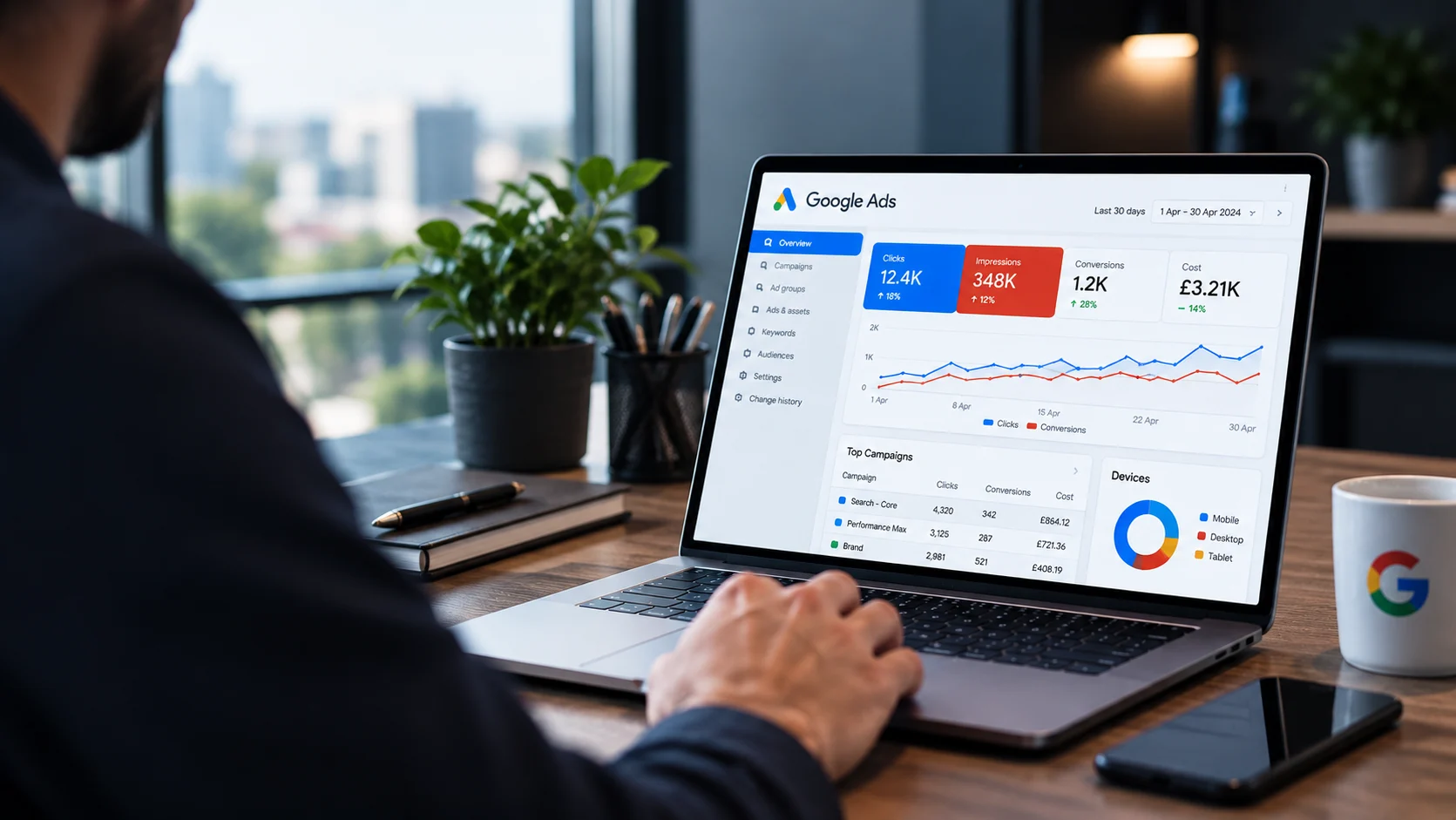
Google Ads Consulting
Google Ads Consulting Services
Google Ads Account Audit
Review account structure, campaign settings, search terms, keywords, ads, bidding, budgets and conversion tracking to identify priority opportunities.
Campaign Strategy and Setup
Build or refine campaigns around the business goal, search intent, target audience, budget and landing experience.
Keyword Research
Identify commercially relevant searches and organise keyword themes around intent and campaign structure.
Negative Keyword Strategy
Review search-term patterns and exclude irrelevant traffic where appropriate to protect budget and improve targeting.
Ad and Asset Optimisation
Improve ad messaging and relevant assets so they align with the search intent and offer.
Conversion Tracking
Check whether important actions are measured correctly so campaign performance can be evaluated beyond clicks.
Bid and Budget Management
Use appropriate bidding and budget decisions based on campaign goals, data quality and the economics of the business.
Ongoing Optimisation
Review performance, identify waste and opportunities, test changes and refine the account over time.
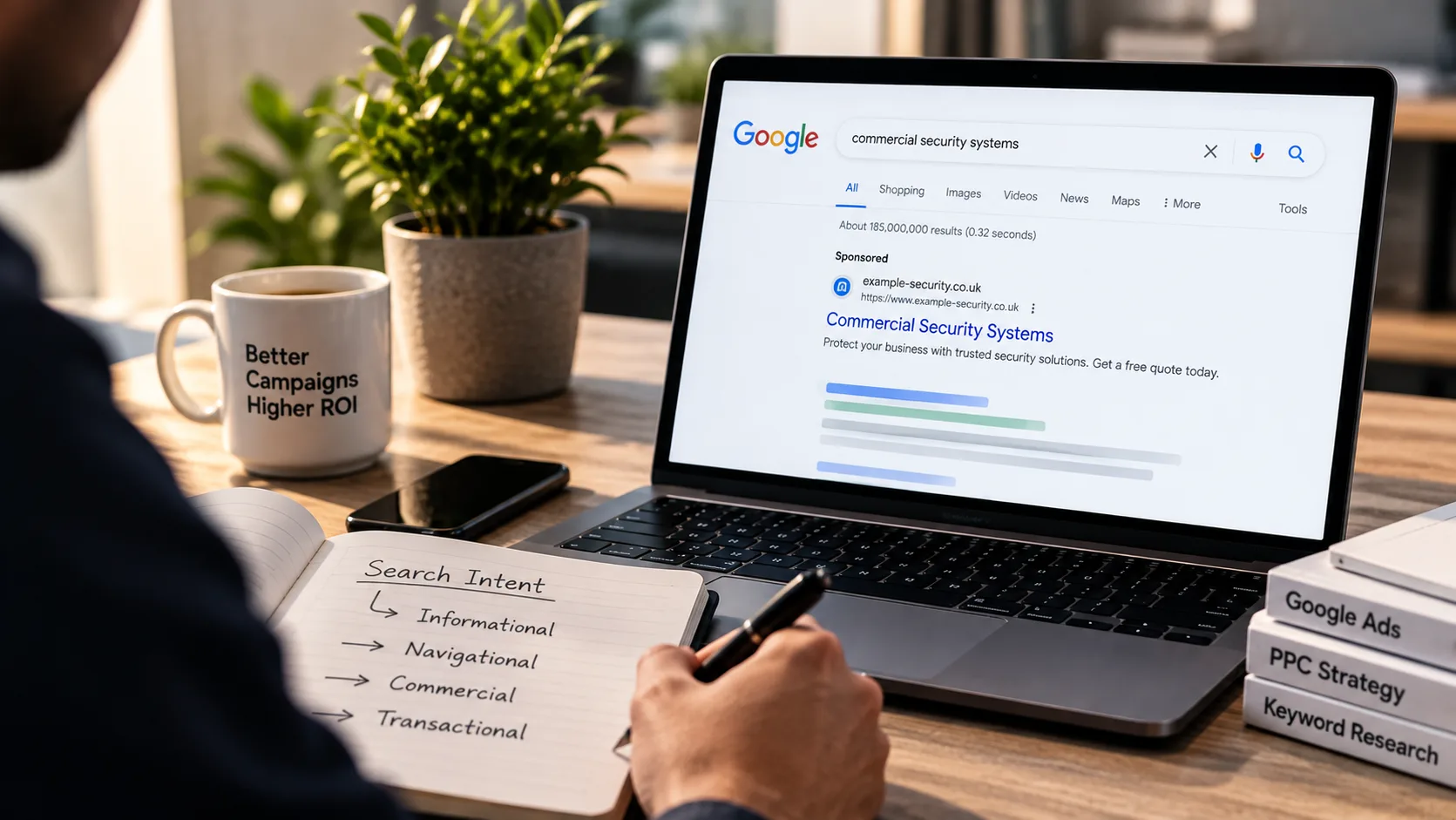
Search Intent & PPC Strategy
Google Ads Starts With Search Intent
Search campaigns work best when the keywords and queries reflect the intent of the people you want to reach. Keyword selection should consider relevance, commercial intent, competition, expected value and the actual offer rather than search volume alone.
Google Ads keywords are used to match ads with searches, and Google provides multiple keyword match types to control how closely searches can match the chosen keywords.
A strong PPC strategy therefore considers the full search-term journey: what people search, which ad they see, what page they land on and whether the resulting action is commercially useful.
Account Structure
Build a Google Ads Account That Can Be Managed and Measured
Campaign structure should reflect the business, audience, geography, products or services and conversion objectives. A clear structure makes it easier to understand performance, control budgets and identify where changes are actually working.
Do not create unnecessary campaign or ad-group complexity simply to make an account look sophisticated. The structure should make management and analysis easier.
The structure should make management and analysis easier.
Conversion Tracking
Conversion Tracking Before Optimisation
Optimisation depends on reliable data. If a campaign is generating clicks but the important actions are not being tracked correctly, it becomes difficult to distinguish useful traffic from wasted spend.
Depending on the business, conversions can include purchases, qualified lead forms, phone calls, booked consultations, registrations or another meaningful action.
Google itself recommends conversion tracking to understand what happens after an ad click and to evaluate outcomes such as return on investment
Reliable conversion tracking supports better campaign decisions.
Ads & Landing Pages
The Ad and Landing Page Need to Work Together
A relevant search can still produce a poor result if the ad message and landing page do not match the visitor's expectations. The offer, headline, information, trust signals and conversion path should support the reason the person clicked.
Search Intent & Offer
Offer, Information & Conversion Path
Where appropriate, Google PPC consulting can therefore include landing-page and CRO observations rather than treating the ad account as an isolated system.
Budget & Bidding
Google Ads Budget and Bidding Strategy
There is no universal Google Ads budget or bid that works for every business. The appropriate approach depends on the market, keyword costs, conversion rate, customer value, competition and campaign objective.
Google states that average daily budgets are set at campaign level and that actual daily served cost can vary while remaining subject to the platform's spending limits.
The right decision is to set a budget that is commercially sensible and large enough to generate useful data, then evaluate performance against real business outcomes.
Budget should be large enough to generate useful data while remaining commercially sensible.
Campaign Types & Business Goals
Google Ads Campaigns for Different Business Goals
Search
Capture demand when people actively search for relevant products or services.
Active Search DemandShopping
Promote eligible ecommerce products through product-focused advertising where appropriate.
Product-Focused AdvertisingDisplay
Reach audiences across Google's display network when awareness, remarketing or other display objectives make sense.
Awareness & RemarketingYouTube
Use video campaigns to reach relevant audiences when video is appropriate to the goal and creative assets.
Video-Led Audience ReachOnly recommend campaign types that fit the actual business objective, offer, audience and available creative or product data.
Ongoing PPC Optimisation
Ongoing Google PPC Optimisation
Campaign optimisation should be structured around what the data says, not constant changes for the sake of activity.
Depending on the account, optimisation can include search-term analysis, negative keywords, keyword and targeting decisions, ad testing, budget allocation, bidding strategy, landing-page observations and conversion-tracking checks.
Changes should have a reason, be measurable where possible and be reviewed after enough data is available.
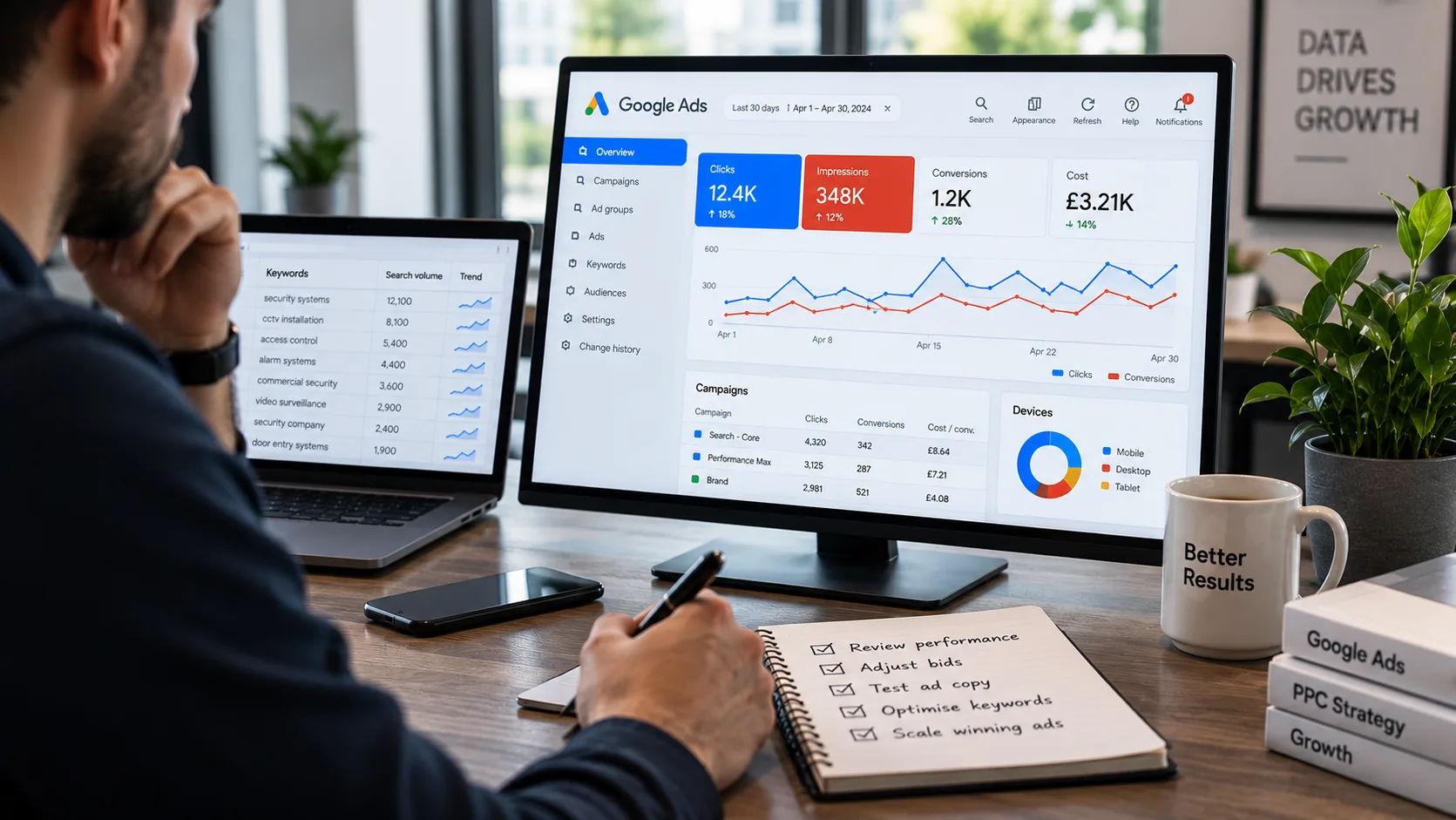
Google Ads Process
How I Approach Google Ads
1. Understand
Clarify the offer, target market, business goal, customer journey and commercial constraints.
2. Audit or Research
Review the current account or research the opportunity, keywords, competitors and audience.
3. Structure
Design the campaigns, keyword themes, targeting, ads, budgets and tracking framework.
4. Launch or Rebuild
Implement the agreed campaign structure or improve the existing account.
5. Measure
Review conversions, search terms, costs and other relevant performance signals.
6. Optimise
Refine targeting, ads, budgets, bidding and landing experience based on evidence.
Consultant Evaluation
How to Evaluate a Google Ads Consultant
The right consultant should be able to explain what they will actually do inside the account, how conversion tracking will be checked, how search terms and negative keywords will be reviewed, what reporting will contain and how recommendations will change when the data changes.
A useful consultant-client relationship should also leave the business with clear account ownership, understandable reporting and a strategy that can be explained — not simply a monthly bill for unexplained changes.
Recent consultant-selection guidance commonly emphasises account ownership, search-term review, conversion tracking, reporting and the ability to explain recommendations.

Consultant Selection
How to Evaluate a Google Ads Consultant
The right consultant should be able to explain what they will actually do inside the account, how conversion tracking will be checked, how search terms and negative keywords will be reviewed, what reporting will contain and how recommendations will change when the data changes.
What they will actually do inside the account
How conversion tracking will be checked
How search terms will be reviewed
How negative keywords will be reviewed
What the reporting will contain
How recommendations change when the data changes
A useful consultant-client relationship should also leave the business with clear account ownership, understandable reporting and a strategy that can be explained — not simply a monthly bill for unexplained changes.
Recent consultant-selection guidance commonly emphasises account ownership, search-term review, conversion tracking, reporting and the ability to explain recommendations.
Practical Consulting
Practical Google Ads Consulting With Direct Involvement
I approach Google Ads as a business and measurement problem rather than simply an ad-buying task. The account should connect search intent, campaign structure, messaging, landing experience, tracking and the commercial goal.
As an individual digital marketing professional, I work directly on research, campaign strategy, optimisation and analysis where those activities are within the project scope.

Common Questions
Google PPC Consultant FAQs
01 How much does a Google Ads consultant cost?
Google Ads consultant pricing varies according to the account's size and complexity, campaign types, number of markets, tracking requirements, level of strategy and whether the work is an audit, setup, rebuild or ongoing management. There is no single universal consultant fee. The scope of work should be defined before comparing prices.
02 How much does Google Ads cost?
Google Ads does not have one fixed cost. The amount a business spends depends on factors such as industry, target audience and keywords, while the campaign budget is controlled through Google Ads settings. Google describes Ads as a pay-per-click platform and provides average daily budget controls at campaign level.
03 How much should I spend on Google Ads per month?
The right monthly budget depends on the market, keyword costs, conversion rate, customer value, competition and campaign objective. A sensible budget should be large enough to generate useful data while remaining appropriate to the business economics. There is no credible one-size-fits-all monthly amount.
04 How long does it take to see results from Google Ads?
Ads can begin generating impressions and clicks shortly after campaigns are approved, but meaningful performance evaluation requires reliable conversion tracking and enough relevant data. Early optimisation can identify obvious issues quickly, while decisions about scaling and profitability often require more conversion history.
05 Is Google Ads worth it for a small business?
Google Ads can be useful for a small business when there is relevant search demand, a competitive offer, reliable tracking and a budget that makes sense for the expected customer value. It is not automatically the right channel for every business; the search demand, economics and conversion path should be assessed first.
06 What is the difference between a Google Ads consultant and a Google Ads agency?
A consultant is typically an individual specialist who provides strategy, analysis and hands-on account work. An agency may offer a larger team and additional capabilities such as creative production, development, landing-page work or multi-channel delivery. The better choice depends on the complexity of the account and the level of support required.
07 Do I need a Google Ads consultant if I already have a campaign running?
Not necessarily, but an independent consultant can be useful when the account is underperforming, conversion tracking is unclear, the structure needs a major review or the business wants an external assessment before increasing spend. An audit can help distinguish account issues from problems caused by the market, offer or landing experience.
08 What should a Google Ads consultant manage?
Depending on the engagement, a consultant may manage account structure, keyword and search-term analysis, negative keywords, ads and assets, bidding, budgets, conversion tracking, campaign testing, landing-page recommendations and reporting. The exact scope should be documented before work begins.
09 Can a Google Ads consultant guarantee leads or sales?
No responsible consultant can guarantee a fixed number of leads or sales from Google Ads. Results depend on factors including search demand, competition, budget, offer, landing experience, conversion rate and tracking quality. A consultant can build and improve the campaign system, but outcomes cannot be guaranteed in advance.
10 Should I hire a PPC consultant or manage Google Ads myself?
Self-management can work for a simple account when the business has the time and skills to learn the platform and evaluate performance. A consultant can be useful when the account is complex, spending is significant, tracking is uncertain or the business wants specialist strategy and optimisation without building that capability internally.
11 What are negative keywords in Google Ads?
Negative keywords are terms used to prevent ads from showing for searches that are not relevant to the campaign. Reviewing search terms and adding appropriate negatives can help reduce irrelevant traffic and protect budget when the campaign's targeting allows it.
12 What is PPC?
PPC stands for pay per click. It is an advertising model where the advertiser generally pays when someone clicks an ad. Google Ads is a major PPC advertising platform.
Ready to Make Google Ads Work More Intentionally?
If you are investing in Google Ads and want a clearer campaign structure, better measurement or more disciplined optimisation, I can help assess the account or opportunity and determine the right next step.