
Paid Media Consultant Focused on Strategy, Performance and Qualified Growth

I help businesses plan, launch and improve paid media campaigns across platforms such as Google Ads, Meta Ads and LinkedIn Ads. My approach connects audience intent, campaign structure, creative or messaging, conversion tracking and ongoing optimisation to the business goal.

What Does a Paid Media Consultant Do?

A paid media consultant helps a business decide where and how to invest in digital advertising. The work can include channel strategy, audience research, campaign structure, keyword or audience targeting, ad messaging, budget allocation, conversion tracking, landing-page recommendations, optimisation and performance analysis.

The role is broader than simply creating ads. A consultant should understand the business objective, identify the right advertising opportunities and establish a measurement framework that helps determine whether the investment is producing the intended outcome.

The exact service depends on the business and platform. A local lead-generation campaign, a B2B LinkedIn campaign and an ecommerce paid-social campaign require different strategies.

Paid media consultant planning digital advertising strategy and campaign performance

Paid Advertising Services

Paid Advertising Services Built Around the Business Goal

Paid Media Strategy

Define the role paid advertising should play in the broader marketing plan, including audience, channels, objectives and measurement.

Campaign Planning and Setup

Structure campaigns around the relevant platform, audience intent, offer, budget and conversion goal.

Audience and Keyword Research

Identify the searches, audiences and buying signals most relevant to the campaign.

Ad Messaging and Creative Direction

Develop or guide messages that connect the audience's problem or intent with the offer.

Conversion Tracking

Review whether important actions are being measured correctly so campaign decisions are based on useful data.

Campaign Optimisation

Monitor performance, identify waste or missed opportunities and make structured changes based on evidence.

Performance Reporting

Translate campaign data into clear findings, decisions and next actions rather than reporting vanity metrics alone.

Paid Media Platforms

Paid Media Across the Platforms That Matter
Google Ads consultant and paid search advertising strategy

Google Ads Consultant

Google Ads can capture demand when people are actively searching for a product, service or solution. Depending on the account, strategy may involve search, shopping, display, YouTube or other campaign types.
Meta Ads consultant and Facebook Instagram advertising strategy

Meta Ads Consultant

Meta advertising can help businesses reach audiences across Facebook and Instagram using interests, behaviours, first-party data and platform-based targeting. Effective campaigns require a clear offer, strong creative or messaging, useful landing experiences and reliable measurement.
LinkedIn Ads consultant and B2B advertising strategy

LinkedIn Ads Consultant

LinkedIn Ads can be useful for B2B campaigns where professional attributes and business audiences matter. The strategy should account for audience quality, offer, buying cycle, creative and lead qualification rather than optimising only for cheap clicks.
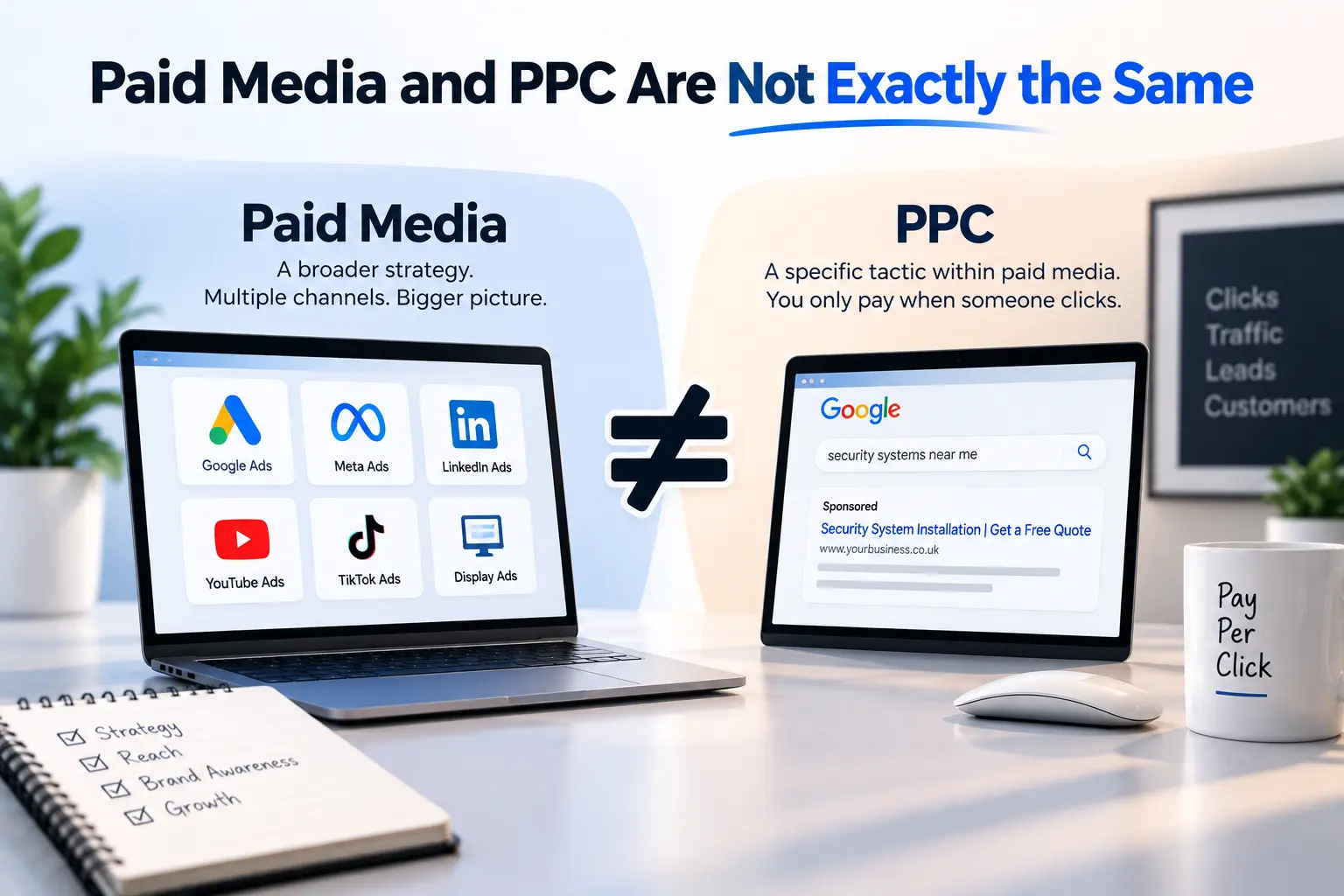
Paid media and PPC advertising strategy

Paid Media Terminology

Paid Media and PPC Are Not Exactly the Same

PPC, or pay-per-click advertising, describes an advertising model where advertisers pay when a user clicks an ad. Paid media is broader and can include paid search, paid social, display, video and other digital advertising formats. The terms overlap, but they should not be treated as exact synonyms.

Advertising Model

PPC

Broader Discipline

Paid Media

This distinction is useful because a paid media strategy should choose channels according to audience, intent, objectives and measurement not simply because a platform happens to support pay-per-click advertising.

Start With the Business Objective, Not the Ad Platform

A strong paid media strategy begins with the business goal. That may be lead generation, ecommerce sales, booked consultations, app installs, qualified B2B enquiries or another measurable outcome.

Once the goal is clear, the campaign can be designed around audience, offer, landing experience, tracking and budget. This prevents the common mistake of choosing a platform first and then trying to force the business into it.

A consultant should also identify what can realistically be measured and what information is needed to evaluate campaign quality.

Lead generation

Ecommerce sales

Booked consultations

App installs

Reach the Right Audience With the Right Message

Paid media performance depends heavily on audience quality and message-market fit. Search campaigns can leverage explicit intent; social campaigns can create demand or reach defined audience groups. The right mix depends on how customers make decisions in the market.

Targeting should therefore be linked to the customer journey, not treated as a collection of audience settings.

Paid media performance depends heavily on audience quality and message-market fit.

Measure the Actions That Matter

Clicks and impressions can show activity, but they do not necessarily show business value. Conversion tracking should capture the actions that matter to the campaign, such as qualified leads, purchases, registrations, calls or other meaningful outcomes.

Outcome

Qualified leads

Outcome

Purchases

Outcome

Registrations

Outcome

Calls

Before scaling spend, tracking should be tested so that campaign data is reliable enough to support budget and optimisation decisions.

Paid Advertising Does Not End at the Click

An advertising campaign can attract the right audience and still fail when the landing experience is unclear, slow, irrelevant or difficult to convert through.

The ad

The promise in the message

The landing page and offer

The conversion action

Paid media analysis should therefore consider the relationship between the ad, the promise in the message, the landing page, the offer and the conversion action.

Where useful, paid media recommendations can include landing-page and CRO observations alongside campaign recommendations.

Paid Media Planning

How I Think About Paid Media Budgets

There is no universal paid media budget that works for every business. The appropriate level depends on the market, competition, customer value, conversion rate, sales process, campaign objective and available data.

The goal is not simply to spend more. A sensible budget should give the campaign enough room to learn while remaining appropriate to the economics of the business.
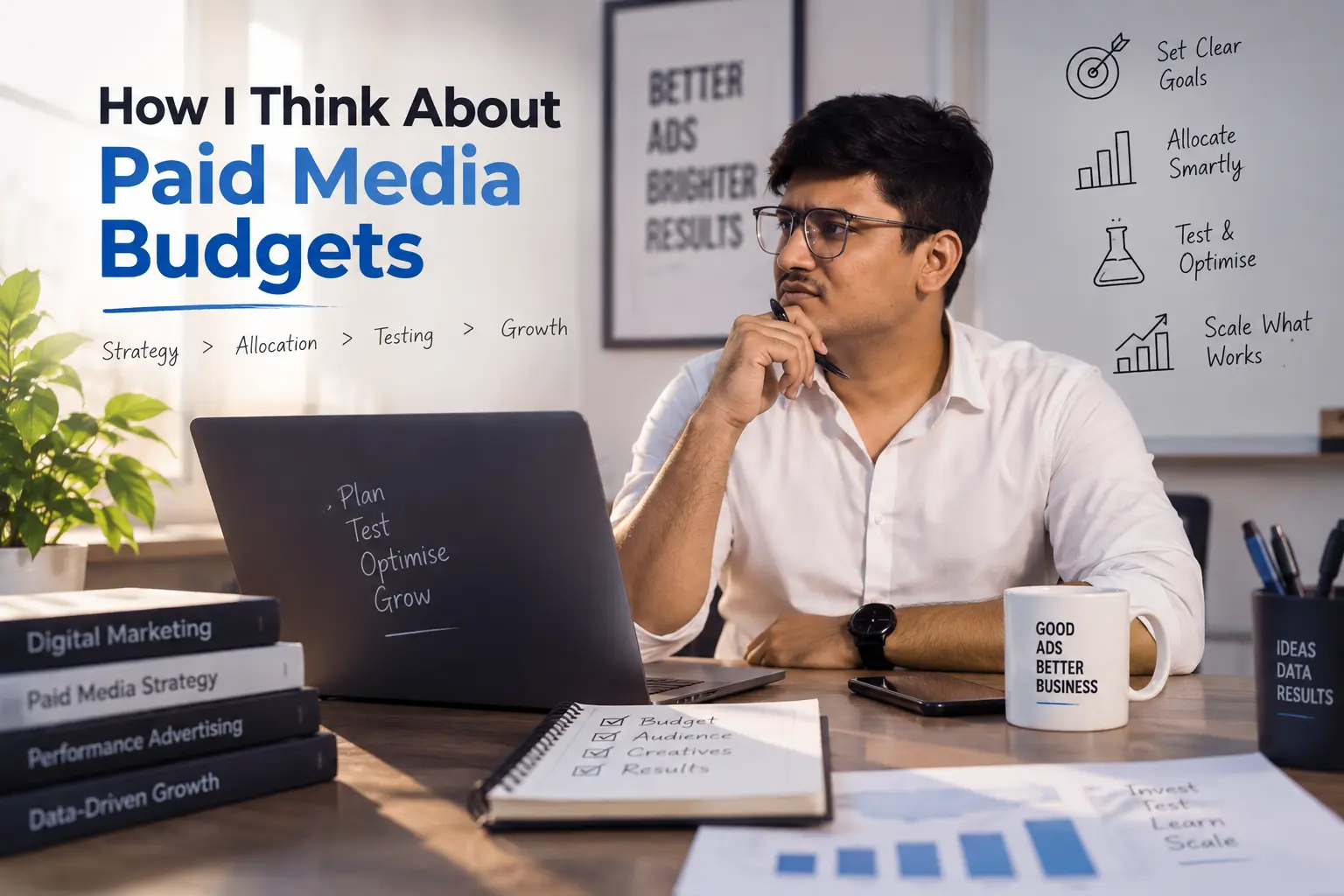

Paid media budget planning based on business objectives and campaign economics

My Process

How I Approach Paid Media

1. Understand

Clarify the business goal, offer, audience, market, customer journey and available resources.

2. Research

Review the market, competitors, search demand, audience opportunities and existing campaign data.

3. Plan

Select relevant channels, campaign structure, targeting, messaging, tracking and budget approach.

4. Launch or Optimise

Implement the agreed strategy or improve an existing account based on the diagnosis.

5. Measure

Review meaningful conversions and campaign performance rather than relying on surface-level metrics.

6. Improve

Test, refine budgets, remove waste and improve the campaign based on evidence.

Paid media strategy with direct practical involvement

Paid Media Strategy With Direct, Practical Involvement

I approach paid media as a business and measurement problem rather than simply an ad-buying task. The work should connect the platform to the audience, the message, the conversion path and the business objective.

As an individual digital marketing professional, I work directly on research, campaign strategy, optimisation and analysis where those activities are within the project scope.

My portfolio and case studies provide the strongest evidence of the work I have actually completed. Claims about performance should always be supported by the available project data.

Common Questions

Paid Media Consultant FAQs

What does a paid media consultant do?

A paid media consultant helps a business plan, manage or improve its digital advertising strategy. The work can include channel selection, audience and keyword research, campaign structure, ad messaging, budget allocation, conversion tracking, optimisation, reporting and landing-page recommendations. The exact scope depends on the business and platforms involved.

How much does a paid media consultant cost?

Paid media consultant pricing varies according to the number of platforms, account complexity, campaign volume, advertising budget, tracking requirements and level of strategic or hands-on support. Some consultants charge a project fee, hourly rate or monthly retainer, while others use different models. The scope of work should be defined before comparing prices.

What is the difference between a paid media consultant and a PPC consultant?

A PPC consultant typically focuses on pay-per-click advertising, especially paid search. A paid media consultant can take a broader view across paid search, paid social, display, video and other digital advertising channels. The terms can overlap, but paid media is generally the broader category.

How much should a business spend on paid advertising?

There is no universal minimum or ideal budget. The appropriate amount depends on the market, competition, customer value, conversion rate, sales cycle and campaign objective. A sensible budget should be large enough to generate useful data while remaining commercially responsible for the business.

How long does it take to see results from paid media?

Paid advertising can begin generating traffic soon after a campaign launches, but meaningful performance evaluation requires reliable tracking and enough relevant data. Early optimisation may identify obvious issues quickly, while stronger conclusions about scaling and profitability often require more time and conversion data. No consultant should guarantee a specific outcome within an arbitrary number of days.

Is paid media better than SEO?

Paid media and SEO solve different problems. Paid advertising can provide faster visibility and controlled targeting, while SEO aims to build organic visibility that can compound over time. The better channel depends on the business, objective, competition, timeframe and economics. In many cases, the two can complement each other.

Which paid advertising platform is best for my business?

There is no universally best platform. Google Ads can be strong when people are actively searching for a solution, Meta can be useful for audience-based demand generation, and LinkedIn can be valuable for certain B2B objectives. The right choice depends on the audience, offer, buying journey, creative assets, budget and measurement setup.

How do I know whether my paid advertising is working?

Start with the conversions that matter to the business rather than clicks alone. Depending on the campaign, this may include qualified leads, purchases, booked calls or other meaningful outcomes. Reliable conversion tracking, lead-quality feedback and clear reporting are necessary to judge performance properly.

Should I hire a paid media consultant or an agency?

An individual consultant can be a good fit when you want direct access to the person doing the strategic and optimisation work, especially for focused accounts or projects. An agency may be more suitable when you need a larger team, multiple specialist functions or broader delivery capacity. The right choice depends on the account's complexity and the level of support required.

What does PPC stand for?

PPC stands for pay per click. It is an advertising model in which the advertiser generally pays when someone clicks an ad. PPC is commonly associated with search advertising but can also appear in other digital advertising environments.

Ready to Make Paid Media Work Harder?

If you are investing in digital advertising and want a clearer strategy, better measurement or more disciplined campaign optimisation, I can help assess the opportunity and determine the right next step


Main Contact FORM
Scroll to Top