
Industry: Sustainable period products (B2C and B2B) | Market: United Kingdom | Timeframe: March to June 2025 (4 months) | My role: SEO strategy, keyword research, landing page creation, technical SEO, on-page optimization, conversion tracking
A UK brand selling organic, sustainable period products had a good problem and a bad one. People were finding them and buying, but almost all of that traffic was individual shoppers. The brand wanted workplaces, schools, councils and other organizations (B2B) to buy in bulk, and those buyers were not finding the site or filling in the form.
In four months, I took B2B form submissions from 17 to 116. Search visibility grew by a third, and the brand also became easier to find for everyday shoppers.
Results at a Glance
| Metric | Before (Nov to Feb) | After (Mar to Jun) | Change |
|---|---|---|---|
| B2B form submissions | 17 | 116 | +582% |
| Organic conversion rate | 0.095% | 0.62% | About +550% |
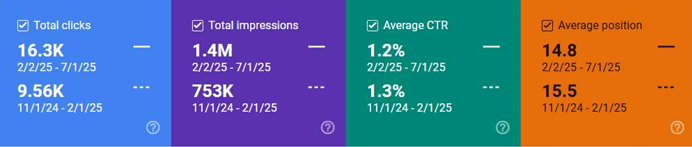
| Organic impressions (Google Search Console) | 881K | 1.17M | +32.8% |
| Average position | 15.0 | 14.8 | Slightly better |
| Returning visitors (GA4) | – | – | +14.9% |
| Engagement time (GA4) | – | – | +9.6% |
| Organic clicks | 12.2K | 11.6K | -4.9% |
A note on clicks: Total clicks dipped slightly while impressions grew. That is normal when a site starts appearing for many new searches, including B2B terms, before it ranks high enough to earn clicks on them. I optimized for lead quality over raw traffic, because one B2B enquiry is worth far more than a handful of extra visits.
The Challenge
The brand’s SEO was working for B2C, but the business wanted to win bulk and organizational orders. I found three problems:
- No pages for B2B searches. Nothing on the site matched what a procurement manager or HR lead types into Google, such as “bulk period products for workplaces”.
- Weak signals on existing pages. Titles and descriptions were not written to attract buyers with commercial intent.
- No clear view of what was working. B2B form completions were not properly tracked, so it was hard to see which pages and channels produced leads.
My Strategy
I followed one idea: match each page to exactly what a specific buyer is searching for, make it easy for Google to understand, then measure the leads it produces.
1. Keyword research focused on B2B buying intent
I started with the searches businesses actually use when they are ready to buy, not just high-volume terms. I grouped keywords by intent: who is searching (a school, an office, a charity) and how close they are to buying. I then used Google Search Console to find keywords the site already showed up for but was not winning.
2. Dedicated bulk purchase page for B2B buyers
B2B buyers need different information from shoppers: volume pricing, delivery, ordering process, and a clear way to request a quote. I built a landing page for them, targeting high-intent commercial keywords. Starting from zero, it earned over 1,000 impressions and its first clicks within the period, and now sits on page two of Google with room to climb
3. Technical health
Google can only rank what it can crawl and understand. I audited the site with Google Search Console and GA4, fixed the highest-priority technical issues first, and listed the remaining items (crawl issues, schema markup, internal linking) as the next phase
4. Metadata rewritten for transactional intent
I rewrote title tags and meta descriptions on product pages, B2B landing pages and weak performers, adding high-intent transactional keywords. This helps the right searchers see a result that matches what they want. I then watched impressions against clicks to see which rewrites to refine.
5. Conversion tracking in GA4
I set up tracking for B2B form completions and mapped the journey from first visit to enquiry. This showed that organic search was the strongest lead source, ahead of direct and referral. I gave the client a live recommendations worksheet and monthly snapshots to act on.
What Happened
B2B leads grew more than 6x
Form submissions rose from 17 to 116. The organic conversion rate climbed from 0.095% to 0.62%, so the traffic arriving was far more likely to become an enquiry. This was the main goal, and SEO delivered it.
Visibility grew across the board
Impressions rose 32.8% as the site began ranking for more searches, including “organic pads” and “bamboo period products”, and appearing in more regions. Organic users grew 3.5%, overall traffic 6.6%, and returning visitors 14.9%
Key page: Period Dignity
Impressions on this page more than doubled (19.2K to 42.7K, +122%) and its average position improved from 13.4 to 11.5. Clicks have not caught up yet (135 to 107), so the next step is further metadata and content work to turn that visibility into clicks.
What I Would Do Next
- Complete the remaining technical SEO work: crawl issues, schema markup and internal linking.
- Keep refining titles and descriptions to lift click-through rate.
- Build more landing pages for specific commercial-intent searches, such as by sector.
- Scale blog content to build topical authority and support the bulk page with backlinks.
Key Takeaways
- Target the buyer you want, not just the traffic you can get. Dedicated B2B pages outperformed generic traffic growth.
- Impressions come before clicks. New rankings often show up in visibility first, then in traffic.
- Track conversions, not just clicks. Lead tracking is what proved the strategy worked.
Want to attract higher-value B2B leads through search? Get in touch.